info@polydome.ie
 057 912 0424
 Polydome Ltd, Birr, County Offaly, R42 VX36




 info@polydome.ie
 057 912 0424
 Polydome Ltd, Birr, County Offaly, R42 VX36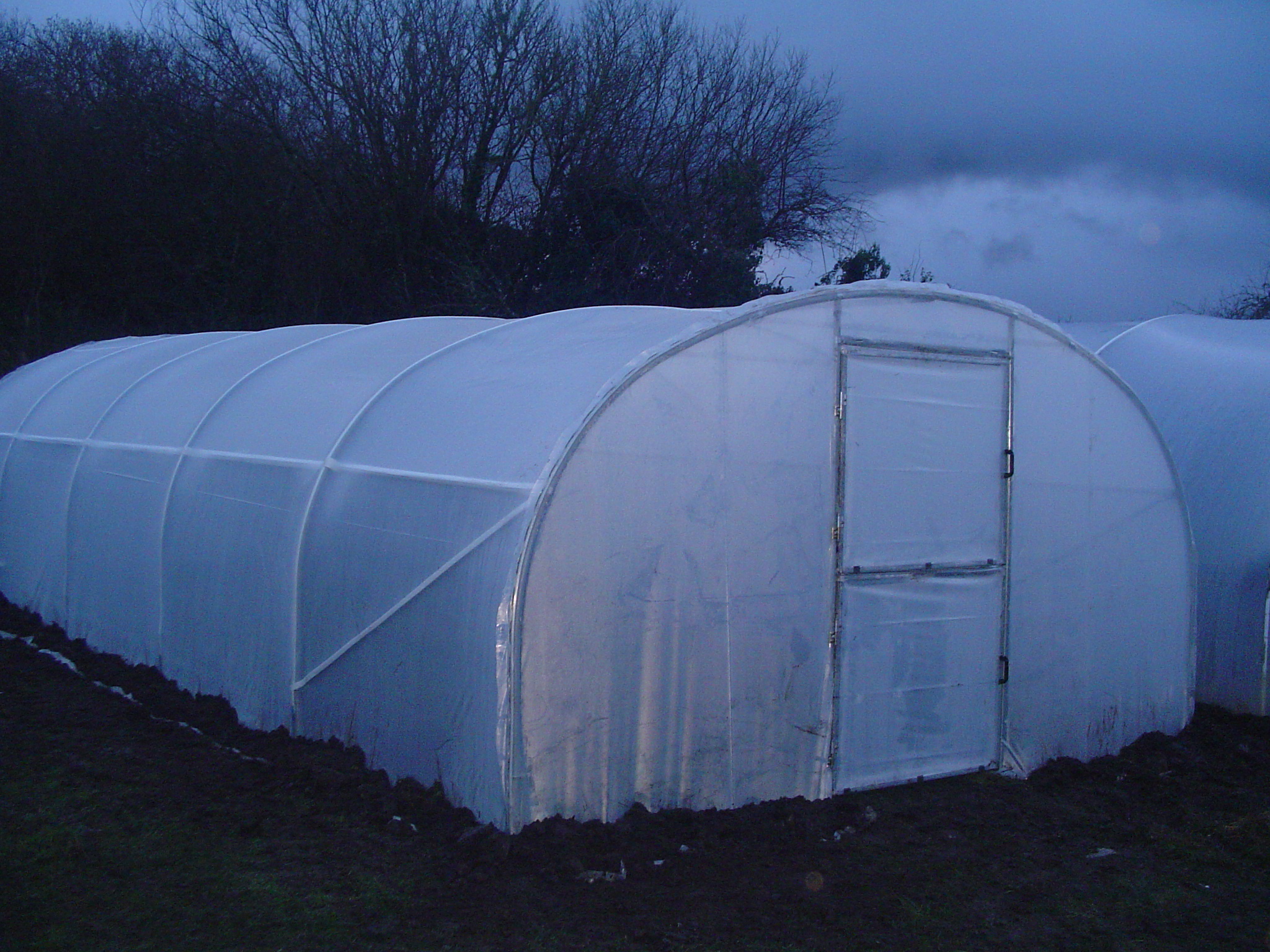
Polytunnels perform brilliantly year-round, but winter is the season when they face the greatest environmental stresses. Wind, snow, frost, and freezing rain can all strain the structure.
This guide outlines the most important steps in our opinion to protect your polytunnel during Ireland’s winter weather.
- Inspect and Repair the Polythene Cover Before Winter
Polythene naturally ages over time. Even small imperfections can turn into major failures under storm pressure. Birds can peck holes at the ridge, cats and dogs may scratch the covers, debris flying in the wind can cause puncture holes.
What to look for during inspection
- Small cuts
- Areas where the cover may have slipped out of the fixing system
- Areas where the polythene has thinned or lost tension
Why repairs are essential
Even minor damage can:
- Worsen rapidly in high winds
- Compromise the tunnel during storms
Best repair method
Use our excellent polytunnel repair tape to repair any holes, this tape uses new technology to form a strong bond when applied correctly.
Apply repairs before winter storms, ensure that when you apply the repair tape the surface is dry, and you are stretching the tape onto the surface.
If a cover is buried in the ground to secure it – and if during a storm there is a lot of rain followed by a lot of wind, unless the water drains away quickly the cover can loosen (literally slipping up out of the trench). Good drainage is important. If the cover is fixed to rails just inspect and see prior to any storms that there are no areas where the cover is in need of extra reinforcement in the rail.
- Secure Polytunnel Doors Before Storm Events
Openings are the most vulnerable points in any polytunnel.
Sliding doors
- Double sliding doors:
-
- Can be secured together using cable ties on the handles to stop them opening.
- Single sliding doors:
-
- A hole can be drilled in the top sliding door track and a bolt popped in it to prevent the rollers rolling to open the door.
- Hinged Doors (and Sliding Doors):
-
- A couple of bags filled with sand or soil can be placed at the bottom of the door(s) to secure.
Universal rule
Regardless of door type:
Close all doors and all ventilation openings before a storm.
Open gaps allow wind to enter, which can lift the cover or distort the frame.
- Snow Management — Critical for Polytunnel Safety
Why Polytunnels are vulnerable to snow damage
- Snow adds significant weight and can cause polythene distortion
- Ultimately too much snow could cause the structure to collapse.
- Structures under snow load are more easily damaged by wind afterward
What you must do
Remove snow immediately when it begins to accumulate.
Safe snow removal
- Use a soft brush or long-handled tool
- Avoid scraping the polythene
- Prevent snow from compacting
Prevention
- Fitting crop support bars helps to strengthen the structure against snow loading.
- Closing and Securing Ventilation
All vents should be closed before severe weather arrives. Open vents:
- Catch wind
- Stress the cover
- Allows the wind inside to blow out doors etc.
A fully closed polytunnel is far more stable in winter storms.
- Insulate and Protect Frost-Sensitive Crops
Polytunnels hold heat better than open ground, but frost can still penetrate during prolonged cold periods.
How to protect plants
- Install insulated covers (such as fleece we provide) over frost sensitive plants.
For extreme cold
- Use an electric or gas heater to maintain a regular, constant temperature. We offer Bio Green electric heaters designed specifically for areas like glasshouses and polytunnels, the heat disperses evenly, and they have very accurate thermostats which minimise running costs. We also offer propane gas heaters which can provide frost protection and they have the advantage of not needing an electricity supply.
- Do not attempt to heat the entire structure unless you are into commercial production — you can just section off a small area to be kept frost free – the goal is simply to prevent freezing.
Final Thoughts
A polytunnel is one of the most productive growing spaces you can own, early inspection, careful snow management, secure doors, closed ventilation, and thoughtful plant protection will dramatically extend the life of your cover and keep your growing environment stable.